Our Picks
Flowers Aren’t Just Romance, They Are Earth’s Seasoning: A Deconstruction Experiment of Spring
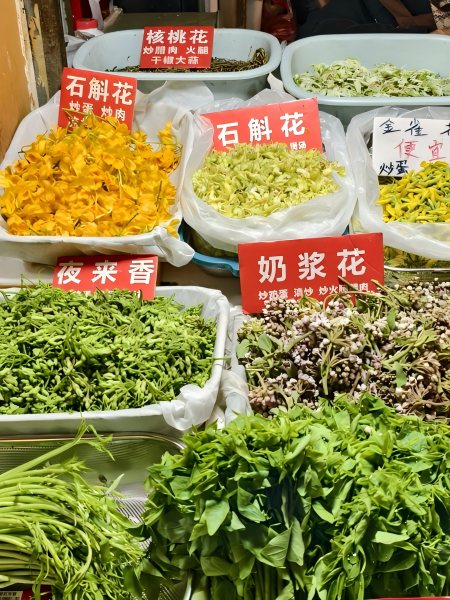
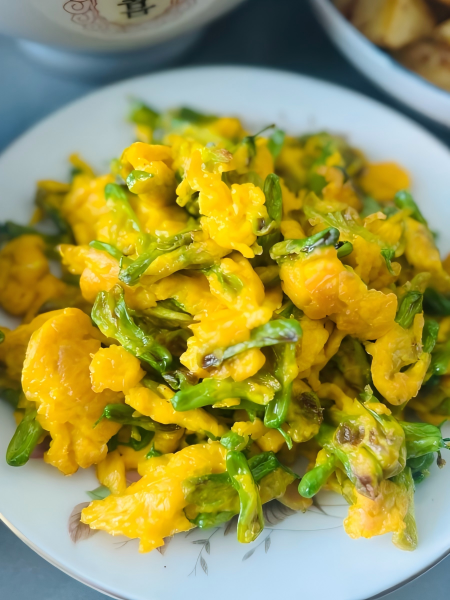
Hey, I’m Calcifer. When most people visit a Yunnan farmers’ market and see baskets of vibrant edible flowers, their first thought is usually, “Wow, I bet that would taste great scrambled with some eggs.”
To me, that’s just painfully boring.
As a culinary creator obsessed with breaking the mold, when I walk into the Zhuanxin market, I don’t see traditional home-cooked recipes; I see a terroir laboratory full of infinite possibilities. In my kitchen, flowers are never just pretty garnishes for plating. They are natural acidifiers, complex volatile oils, and sources of dramatic texture. Today, shift your perspective with me and see how we “reconstruct” the Yunnan spring on a plate.
Extracting the Invisible: When Pine Flowers Become an Oil
Traditional high-heat cooking often destroys the most captivating top notes of a plant. Take the wild pine flowers from the Ailao Mountains, which carry a piercing, crisp woody aroma. Instead of frying or boiling them, we use slow, cold extraction to infuse their core essence into oil. Imagine a perfectly clear, twelve-hour clarified broth made from Yunnan’s Nuodeng dry-aged ham, finished with a few drops of emerald-green “pine flower oil.” The moment you lift the spoon, you smell the cold mist of an alpine forest after the rain, but you taste the deep, savory richness of time.
Playing with Acidity: White Begonia and the Raw Collision
Don’t be fooled by the delicate, pure appearance of the white begonia; its petals hide a fiercely bright, natural fruity acid. I love using it instead of traditional citrus juice to create a Yunnan-style Crudo or Ceviche. Mixing the floral juice with a touch of fermented wild bird’s-eye chili instantly activates the sweetness of the raw protein. Finished with a dusting of dehydrated, roasted wild mushrooms, it delivers an aggressive, wildly untamed tension from the mountains.
Rethinking Texture: Banana Flowers Turned to Ash
Locals usually stew the dense banana flower until it’s soft and mushy, but we completely deconstruct it. We strip away the outer layers, take only the crispest core, dehydrate it, char it, and grind it into an edible “botanical ash” with a smoky, earthy bitterness. When we dust this ash over a mousse made from local Yunnan goat’s milk, that slight bitter char perfectly balances the rich sweetness of the dairy.
At Osemise, we deeply believe that food shouldn’t just be a mechanical repetition of tradition. Next time, drop the cookie-cutter guidebooks and step into my kitchen. Let’s defy logic and devour this land in the most avant-garde way possible.
More From Our Picks