Local Treasures
Bai Tie-Dye
Blue and White Poetry between Cangshan Mountain and Erhai Lake
Cultural Story
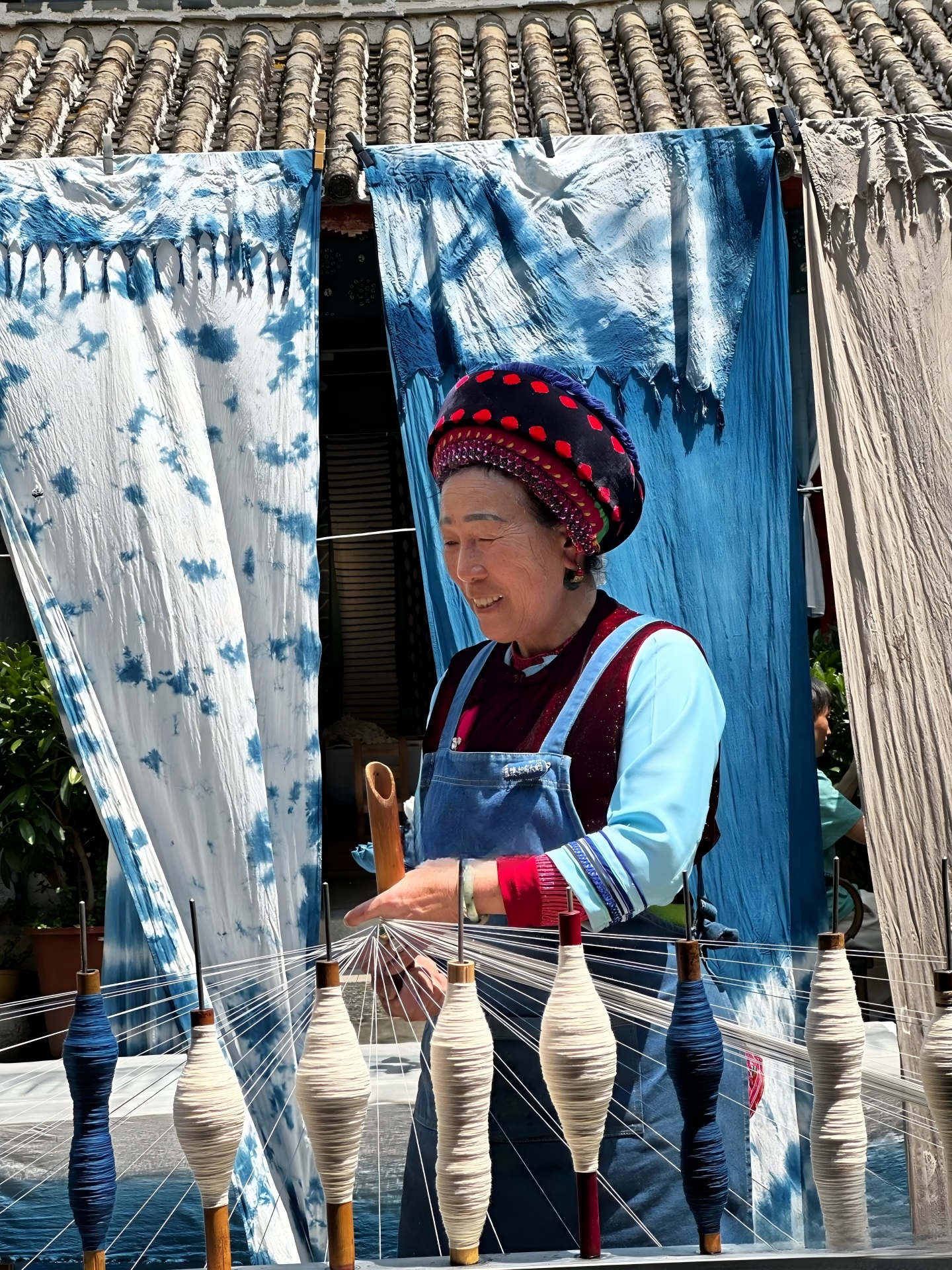
Tie-dye is an ancient craft creating patterns by tying fabric to resist dye, passed down for millennia among the Bai people. Its essence is “using thread as brush, dye as paint”—artisans sew and tie fabric according to patterns, then immerse it in indigo vats made from fermented plants like indigofera. Tied parts stay white; the rest dyes varying shades of blue. After untying, blue-white patterns with natural gradients and crackle textures appear, each unique due to handwork.
Exclusive Experiences
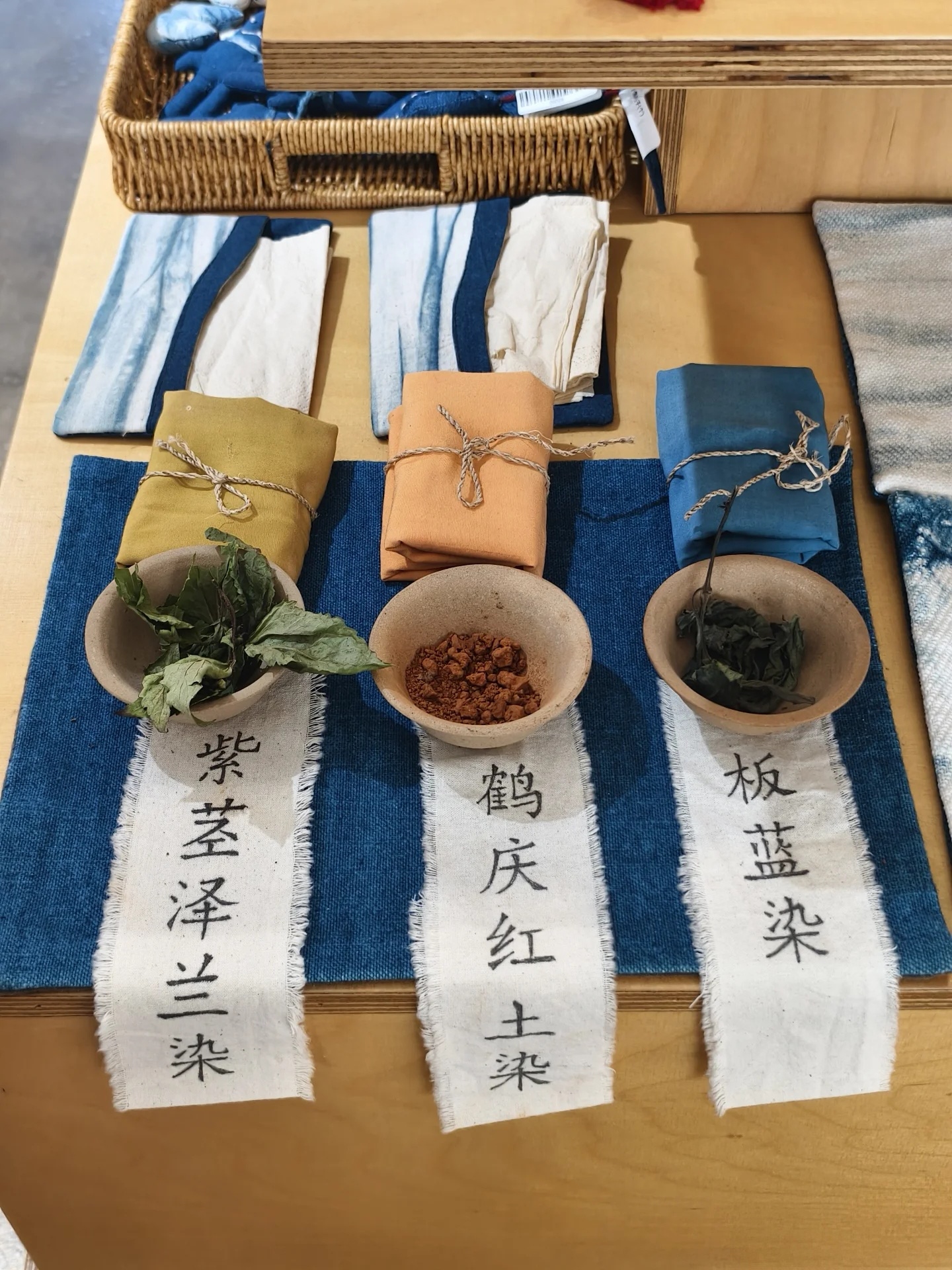
- How does the indigo plant become a vat of blue? In a traditional dye workshop’s yard, we first show you cultivated indigofera. You’ll touch its leaves and learn how this herb ferments over time into deep indigo paste—the starting point for understanding all color and its eco-friendly nature.
- Can I “draw” patterns just by tying with needle and thread? In the workshop, a Bai auntie teaches you three basic tying methods by hand: stitching continuous patterns, tying with rubber bands for dots, or clamping with wood for geometric edges. Trying it yourself reveals: the tighter the tie, the clearer the white pattern.
- Why does white cloth turn blue when dipped in the dye vat? By the vat, you’ll immerse your tied fabric into warm indigo dye with a stick. Upon exposure to air, it oxidizes from yellow-green to blue. Repeated dips deepen the color—a direct demonstration of “indigo blue is extracted from the indigo plant.”
- What do I see when untying the knots? This is like opening a blind box. In the yard, you’ll untie all threads from your dyed, rinsed fabric. As knots loosen, the hidden white patterns and their unique gradients gradually reveal themselves—each result slightly different due to handwork.
- What do the patterns on the blue cloths flying in the village mean? Finally, walking through village lanes, looking up at thousands of blue cloths drying under eaves, we’ll decode common patterns: e.g., butterfly, plum blossom, or Cangshan cloud patterns, and what blessings or wishes they represent.
More From Local Treasures